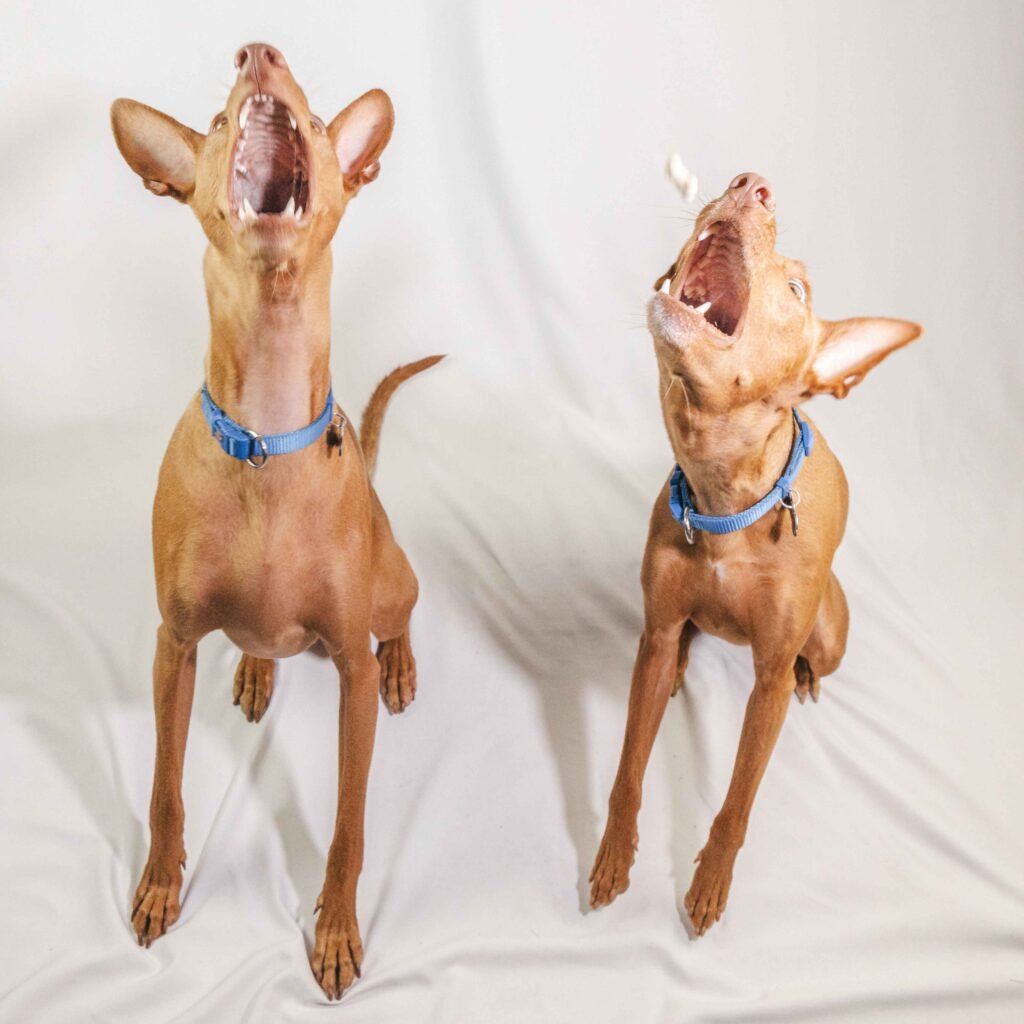
For a dog portrait, start with what holds your dog’s attention for a few seconds. It might be a familiar sound, a favourite toy or your voice. Tell the photographer what excites your dog and what helps them settle, then build the session around those cues.
Start with the easiest photograph
If you are joining your dog in the frame, our first studio portrait guide explains how clothing and the background work together.
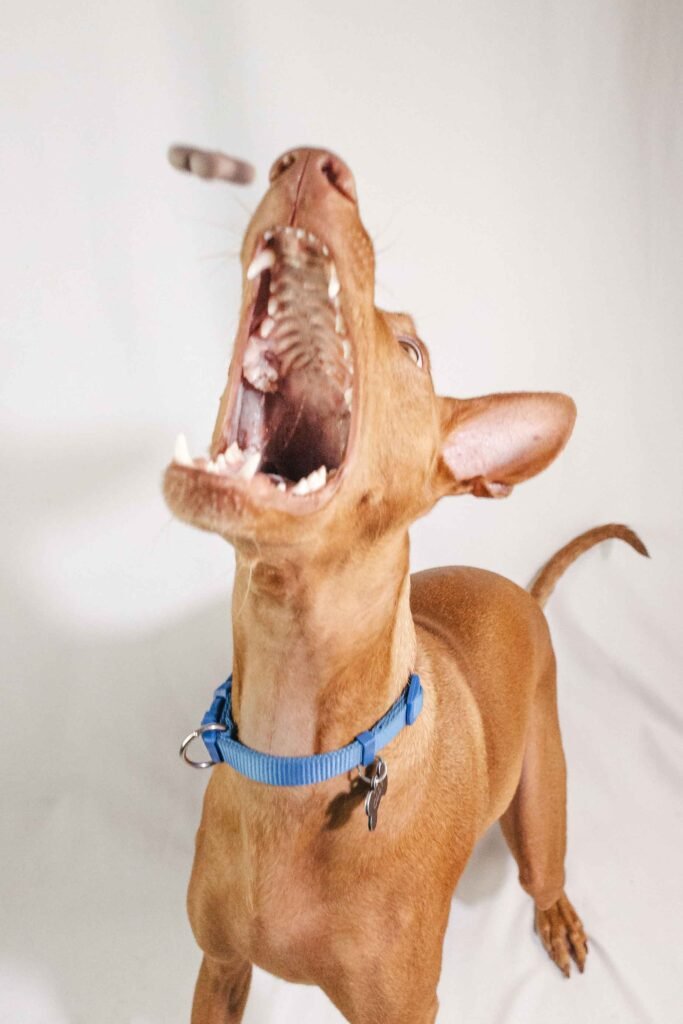
Let the dog explore the space before asking for eye contact. A comfortable standing or seated portrait makes a good starting point. If your dog likes catching treats, tell the photographer first so the frame is ready for the jump rather than just the landing.
Pack for the individual dog
For a dog who settles more easily outside, compare shaded and sheltered outdoor portrait settings before picking a meeting point.
Bring a lead, water and a toy your dog knows. If treats are appropriate, choose ones they already tolerate. For two dogs, ask whether they settle better together or one at a time. Two separate portraits can be just as meaningful as a shared frame.
When the planned portrait does not interest the dog
If the dog keeps returning to a favourite person, use that connection. Photograph the greeting, then ask the owner to sit where the light falls well and let the dog settle beside them. For a member of the family who would rather stay out of the frame, a hand holding a lead or resting beside a paw can still tell the story. Pause when the dog needs a break. There is no reason to keep repeating a cue once attention has moved elsewhere.
Choose the setting around your dog's temperament
Think about where your dog is most comfortable. A familiar outdoor space may suit a dog who enjoys exploring, while another may settle more easily in a quieter controlled setting. Tell the photographer about reactions to strangers, other dogs and unfamiliar sounds. This practical information matters more than choosing a fashionable backdrop.
Consider how the dog travels and how much time they need to settle after arriving. A session should not begin with an expectation that they will immediately perform commands. Allow a gentle introduction to the space and the camera before planning the first portrait.
If your dog has mobility limitations, explain which positions and surfaces are comfortable. You do not need to aim for running photographs to create a varied gallery. Resting, standing beside you or looking towards a familiar voice can all provide meaningful images when the session matches the individual animal.
Pack a small, familiar kit
Bring the lead and harness your dog normally uses. Familiar equipment reduces the number of new things they need to manage. Water, a suitable bowl and bags are practical essentials for an outdoor session. A towel may also be useful depending on the setting.
Choose one or two toys rather than a large bag of distractions. Tell the photographer which toy encourages calm attention and which creates excitement. If you use treats, bring something the dog already tolerates and follow their usual routine. A photo session is not the place to introduce an unfamiliar reward.
Keep the kit with a person who can help when needed. The photographer should know where the useful items are without stopping the session to search through bags. If two dogs are coming, discuss whether a second handler would make it easier to work with them separately.
Start with a portrait the dog can manage
Begin with a comfortable position rather than the most ambitious idea. A dog standing beside their owner or resting on a familiar blanket can become a strong opening portrait. Once they settle, the photographer can change the framing or try another activity.
Use attention cues sparingly. Several people calling at once can make it difficult for the dog to know where to look. Agree who will give the cue and let the photographer explain the desired direction. Sometimes a brief pause produces a clearer expression than repeated calling.
Watch the dog's comfort throughout the session. If they lose interest or need a break, change pace. The plan should allow them to move, drink or rest. A short period of relaxed attention is more useful than trying to maintain a pose after the dog has had enough.
Include the relationship with the owner
Some of the most personal pet photographs include the person the dog trusts. Sitting together, offering a familiar greeting or walking side by side can show that connection. You do not need to look directly at the camera in every frame.
If you prefer not to appear fully in the picture, discuss closer details. A hand resting near a paw, a lead held during a walk or the dog looking towards you can suggest the relationship. The composition should feel intentional rather than looking as if someone was accidentally cropped out.
Choose clothing that is comfortable for the activity. You may need to sit, bend down or move with the dog. Keep the outfit simple enough that the animal remains the focus. If the pictures are for a family wall, think about whether you also want one clear portrait that includes everyone together.
Plan movement and final image choices
For action photographs, choose an activity the dog already enjoys and can do comfortably. The photographer needs to know the direction of movement and where it will finish. Keep the setting appropriate and do not remove a lead simply to achieve a particular image.
Balance movement with quieter photographs. A running frame may show energy, while a close portrait can reveal the eyes, coat and expression. A wider image with the surroundings gives context. These different scales help the gallery describe the dog rather than repeating one successful trick.
When selecting favourites, look for expressions and habits you recognise. The technically neatest pose is not always the picture that feels most like your pet. Tell Wave Photo Malta whether you want digital photographs, a family portrait or a print up to A3. Share any frame dimensions so there is enough room in the crop. The aim is a set of photographs that fits the dog's character and the way you want to remember this stage of their life.
Choose a priority without expecting a performance
Tell the photographer which picture matters most: a clear face portrait, a photograph together or an image that shows a familiar habit. Treat it as a direction for the session rather than a demand that the dog perform on cue. If the planned position does not suit them, the photographer can look for another way to express the same idea. A dog leaning against its owner may show their bond better than a formal seated pose. Keeping the priority flexible helps the session remain comfortable while still giving the photographer a useful understanding of what you hope to take home.
Frequently asked questions
Does my dog need to sit on command?
No. Walking beside you, resting at your feet or briefly turning towards a sound can all make a portrait. Mention reactivity or mobility limitations so the setting and pace suit the dog.
Can the lead stay on?
Tell the photographer if your dog needs to stay on the lead. Its position and your place in the frame can be planned around that.
Plan your project with Wave Photo Malta
Tell Wave Photo Malta about your pet’s temperament, the setting they enjoy and whether you would like to appear in the pictures. Email Wave Photo Malta.